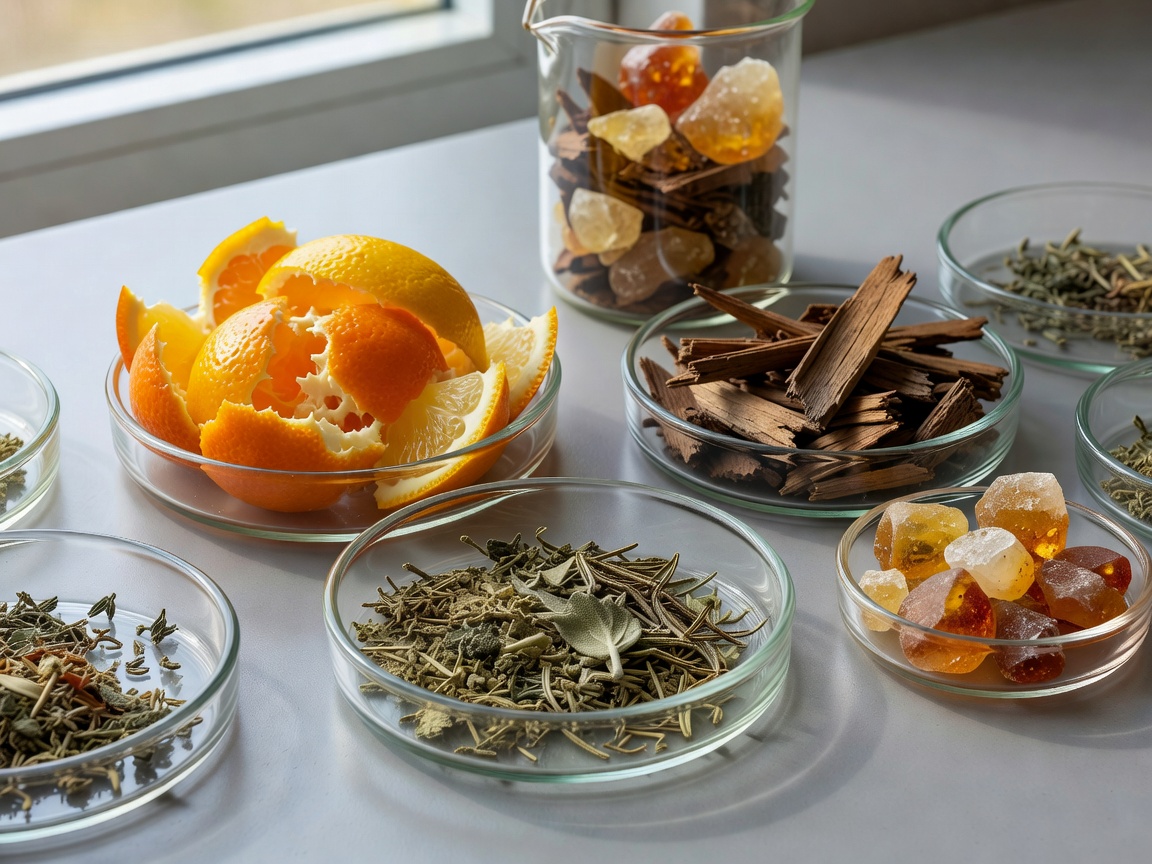
Material groups
Citrus materials can bring bright peel, juice and bitter-green effects. Floral materials may come from flowers, leaves or reconstructed aroma molecules. Woods can provide dry, creamy, smoky or pencil-like structure. Resins often add warmth, depth and balsamic texture.
Spices contribute hot, cool, dry or sweet facets. Herbs can support aromatic, green or medicinal impressions. Roots and seeds can give earthy, powdery or nutty dimensions. Fruits may appear through extracts, distillates or constructed accords.
Role in a formula
Natural materials are derived from plants, animals or other biological sources. Synthetic materials are made through chemical processes. The distinction does not alone determine quality, safety or sustainability. A natural source can face land, water, harvest or traceability pressures. A synthetic route can offer consistency or reduce pressure on a scarce source. Both categories can require careful formulation.
Sourcing questions
Ask where a material originates, how it is processed, whether the supply is traceable and whether the house explains its sourcing standard. Availability can vary by harvest, climate, regulation and supplier. “Botanical” does not automatically mean local, wild or low-impact.
Formulators also consider volatility, colour, stability, allergens, dosage, interaction and product format. This site does not provide medical or safety advice. Consult the product label and the responsible manufacturer for current information.
Practical comparison
| Material group | Typical role | Question |
|---|---|---|
| Citrus | Opening brightness | How is freshness maintained? |
| Wood | Structure and depth | Is the source disclosed? |
| Resin | Warmth and body | What extraction is used? |
| Herb | Green or aromatic lift | Is the effect natural, reconstructed or mixed? |
What to know
Ingredient lists may use regulatory names rather than poetic note names. A note pyramid is a communication tool. It is not a complete formula. Read both sources where available.
Good for
Use this library when comparing botanical claims, studying a house’s vocabulary or building a more precise scent description.
Ask a material question